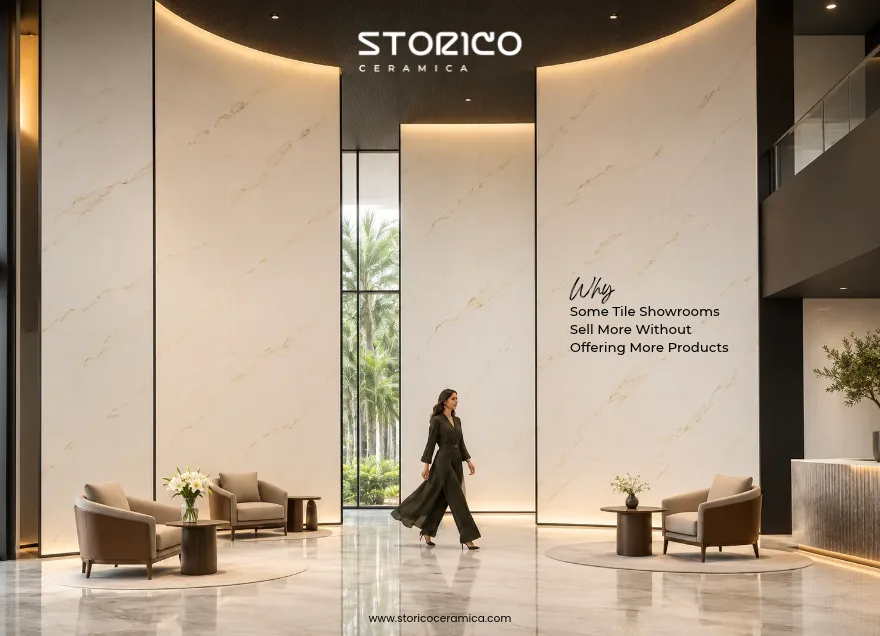
Why Some Tile Showrooms Sell More Without Offering More Products
Two tile showrooms may offer similar collections, comparable prices and nearly identical product categories.
Yet one consistently converts more visitors into customers.
Why?
The difference is not always the number of products available. Often, it comes down to how those products are presented, how customers experience the showroom and how confidently they can make purchasing decisions.
Successful tile showrooms don't necessarily offer more choices. They make choosing easier.
For showroom owners and tile retailers, understanding this difference can create opportunities to improve sales without constantly expanding inventory.
1. More Products Don't Always Mean More Sales
Walk into a showroom displaying hundreds of tile designs without clear organisation, and choosing the right product can quickly become overwhelming.
Customers may struggle to compare colours, finishes, sizes and applications.
Instead of helping them decide, excessive choice can create confusion. Successful showrooms organise collections around customer needs.
For example:
- Residential and commercial applications
- Contemporary and classic design styles
- Different price segments
- Surface finishes and textures
- Coordinated collections
- Popular and newly introduced designs
The objective is not to reduce customer choice unnecessarily.
It is to make the available choices easier to understand and compare.
2. Presentation Can Change How Customers Perceive Value
The same tile can create a different impression depending on how it is displayed.
A small sample may communicate colour and texture, but a well-designed application display can help customers imagine the finished space.
Showrooms can improve product presentation through:
Lifestyle Displays: Show how collections work in realistic interior settings.
Coordinated Arrangements: Present complementary colours, finishes and formats together.
Clear Product Information: Make sizes, applications and key specifications easy to find.
Focused Display Areas: Give important collections enough visual space to stand out.
Good presentation helps customers understand the value of a collection before the sales conversation begins.
3. Customers Need Guidance, Not Just a Catalogue
Many showroom visitors arrive with inspiration images but limited technical knowledge.
They may know the appearance they want without understanding which products suit their requirements.
A knowledgeable sales team can make a significant difference.
Instead of immediately showing every available collection, start with questions:
- Where will the tiles be installed?
- What design style do you prefer?
- What is your approximate budget?
- Are there specific sizes or finishes you need?
- Is the project residential or commercial?
- Are there any technical or maintenance requirements?
These conversations help sales teams recommend relevant options.
A good salesperson doesn't simply show products. They help customers make decisions.
4. Make Product Comparison Simple
Customers often hesitate when they cannot clearly understand the differences between collections.
A showroom can reduce this uncertainty by making comparisons easier.
For example, customers may need help understanding:
- Differences between surface finishes
- Suitable applications
- Available sizes
- Maintenance considerations
- Design coordination
- Price positioning
Providing clear, accurate information builds confidence.
Physical samples, digital catalogues and realistic room visualisations can also help customers evaluate options.
When customers understand what they are buying, they can make decisions with greater confidence.
5. Build Relationships With Architects and Interior Designers
Not every showroom customer is an individual homeowner.
Architects, interior designers, contractors and developers can influence material selection across multiple projects.
Showrooms that actively support these professionals may create opportunities for repeat business.
Useful support can include:
- Organised sample libraries
- Updated collection information
- Technical specifications
- Project-based product recommendations
- Clear availability information
- Responsive communication
For professional buyers, convenience and dependable support can be just as important as product variety.
A showroom that makes specification and procurement easier can become a preferred destination for future projects.
6. Use Customer Feedback to Improve Your Collection Strategy
Expanding a showroom's product range without understanding existing performance can increase inventory costs.
Instead, analyse what customers are actually buying and requesting.
Review:
Best-Selling Collections: Which designs generate consistent demand?
Slow-Moving Products: Which collections occupy space without producing sufficient sales?
Customer Enquiries: What products do visitors ask for but cannot find?
Sales Conversion: Which displays generate enquiries and purchases?
Repeat Customers: Which collections or services encourage customers to return?
These insights can help showroom owners improve their existing portfolio before investing in additional products.
Sometimes, better merchandising and stronger product knowledge can create more value than introducing another collection.
7. The Manufacturer Behind the Showroom Matters
A showroom's customer experience depends partly on the manufacturers and suppliers supporting it.
Retailers need more than attractive catalogues.
They also benefit from reliable product information, samples, collection updates and consistent supply.
At Storico Ceramica, we understand the importance of helping distributors and showroom businesses explore collections that suit their customers.
Based in Morbi, Gujarat, India, Storico combines its own large format porcelain tile manufacturing capabilities with a dependable network of manufacturing partners.
This creates opportunities for international distributors to explore different collections, formats and sourcing requirements through one business relationship.
For showroom owners, the right manufacturing relationship can support portfolio planning, product discovery and future business opportunities.
The Best Showrooms Make Buying Easier
A successful tile showroom is not defined by how many products it displays.
It is defined by how effectively it helps customers discover, compare and choose the right materials.
A stronger showroom experience combines:
Relevant Collections + Effective Displays + Knowledgeable Staff + Clear Information + Reliable Supply
Before expanding your inventory, consider whether your existing collections are being presented and sold effectively.
Because sometimes, the opportunity to increase sales is already inside your showroom.
Looking to Strengthen Your Tile Showroom Portfolio?
Explore Storico Ceramica's porcelain tile collections and discover manufacturing opportunities that could complement your existing range.
Frequently Asked Questions
Showrooms can improve sales opportunities by organising collections clearly, improving displays, training sales teams, simplifying product comparisons and strengthening customer follow-up.
Visual merchandising helps customers understand how tiles may look in finished spaces, compare design options and identify collections that suit their requirements.
They can provide knowledgeable guidance, organised displays, accurate product information, physical samples and clear communication about product availability.
Showrooms can support design professionals through sample libraries, technical documentation, updated collections, project assistance and responsive communication.
Not necessarily. Retailers should first evaluate existing sales performance, customer demand and inventory movement before introducing additional collections.

Porcelain Tile Manufacturer & Exporter
As a trusted porcelain tiles manufacturer from India, Storico Ceramica shares practical insights backed by real manufacturing and global export experience. Our content focuses on helping buyers understand porcelain floor tiles and large format porcelain tile solutions with clarity.
Recent Blogs