Porcelain Slab Tiles vs Traditional Tiles: Which Is Better for Modern US Projects?
Modern architecture and interior design across the United States continue to evolve toward cleaner, larger, and more sophisticated spaces.
From luxury residences and hospitality developments to premium commercial environments, architects and designers are increasingly selecting materials that support minimal aesthetics while delivering long-term performance.
This shift has accelerated the popularity of porcelain slab tiles, which are now being used on floors, walls, countertops, and feature surfaces throughout modern projects.
At the same time, traditional porcelain tiles remain widely used and continue to offer practical solutions for many applications.
So, when planning a modern project, which option is the better choice?
The answer depends on design goals, project scale, installation requirements, and long-term expectations.
Understanding the Difference Between Porcelain Slab Tiles and Traditional Tiles
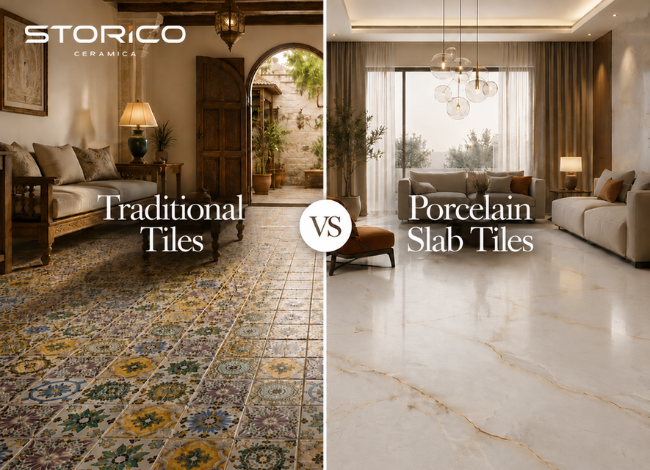
Traditional porcelain tiles have been a trusted solution for residential and commercial projects for decades. They are available in standard formats and are commonly used for flooring and wall applications.
Porcelain slab tiles, however, represent the next generation of porcelain surfaces. Manufactured in significantly larger sizes, they are designed to create expansive, uninterrupted surfaces with minimal grout lines.
While both products offer excellent durability and versatility, the overall visual impact and application possibilities are very different.
Understanding these differences helps architects, developers, and importers make more informed decisions based on project requirements.
Visual Impact and Design Appeal
One of the most noticeable differences between porcelain slab tiles and traditional tiles is the visual experience they create.
Traditional tiles naturally include more grout joints, which divide surfaces into smaller sections. While this works well for many projects, it can interrupt the sense of continuity that modern architecture often seeks.
Porcelain slab tiles, on the other hand, create broad, uninterrupted surfaces that instantly elevate the appearance of a space. Fewer grout lines contribute to a cleaner and more luxurious aesthetic.
This is one of the main reasons why slabs are increasingly used in:
- Luxury residences
- Hospitality projects
- Corporate interiors
- Premium retail environments
When visual continuity is a priority, porcelain slab tiles offer a clear advantage.
Flexibility Across Multiple Applications
Traditional tiles are primarily used on floors and walls. Porcelain slab tiles expand those possibilities significantly.
Today, architects are using porcelain slabs for:
- Flooring
- Feature walls
- Kitchen countertops
- Bathroom vanities
- Fireplace surrounds
- Reception desks
- Furniture applications
This versatility allows designers to maintain consistent materials throughout a project, creating a more cohesive and sophisticated appearance.
For projects that emphasize design continuity, slabs provide greater creative flexibility.
Installation Complexity
While Porcelain slab tiles offer significant design benefits, they also require a higher level of installation expertise.
Their larger size means:
- Specialized handling equipment may be needed
- Installation requires experienced professionals
- Transportation and site management become more important
Traditional tiles are generally easier to handle, transport, and install, making them more practical for projects with limited installation resources.
For straightforward residential applications, traditional tiles may offer a simpler solution.
Maintenance and Cleaning
Maintenance is another area where Porcelain slab tiles offer distinct advantages.
Because slabs reduce the number of grout joints, they create surfaces that are easier to clean and maintain.
This is particularly valuable in:
- Hotels
- Restaurants
- Healthcare facilities
- Commercial environments
Fewer grout lines also contribute to a cleaner appearance over time, helping projects maintain a premium look with less maintenance effort.
For high-traffic spaces, this can become a significant long-term benefit.
Cost Considerations
Cost is often one of the most important factors during material selection.
Traditional tiles generally have:
- Lower material costs
- Lower installation costs
- Easier handling requirements
Porcelain slabs typically involve:
- Higher material investment
- More specialized installation
- Additional transportation considerations
However, evaluating cost alone does not provide the full picture.
Many developers view Porcelain slab tiles as a long-term investment because of the elevated design value they bring to premium projects. In luxury residential and hospitality environments, the visual impact often justifies the additional investment.
Suitability for Luxury Projects
Luxury projects demand materials that deliver both performance and visual excellence.
This is where porcelain slabs have become particularly influential.
In luxury homes, boutique hotels, premium resorts, and high-end commercial interiors, slabs help create:
- Seamless environments
- Architectural sophistication
- Premium guest experiences
- Modern design continuity
As a result, many architects now consider Porcelain slab tiles a preferred solution for projects targeting the luxury market.
Traditional tiles continue to perform well in many applications, but slabs often provide a stronger design statement.
Availability and Bulk Supply Considerations
For importers and project suppliers, sourcing capability is a critical consideration.
As demand for large-format surfaces grows across the United States, many buyers are seeking reliable partners who can consistently supply slab products at scale.
Working with an experienced porcelain slab tiles manufacturer from India offers several advantages:
- Consistent production quality
- Modern slab manufacturing capabilities
- Large-volume supply support
- Export-ready logistics systems
A dependable porcelain slab tiles exporter from India can help importers maintain project timelines while ensuring consistency across multiple shipments.
Why US Architects Are Increasingly Choosing Porcelain Slab Tiles
Several architectural trends are driving slab adoption across the US market.
Modern projects increasingly prioritize:
- Open-concept layouts
- Minimalist design principles
- Seamless visual transitions
- Large-scale architectural surfaces
Porcelain slabs support all of these objectives.
Their ability to create continuous surfaces aligns perfectly with the design direction of contemporary American architecture, making them a preferred choice for architects working on modern residential and commercial developments.
Storico Ceramica – Supporting Modern Slab Projects
Storico Ceramica works with importers, distributors, architects, and project suppliers serving residential, hospitality, and commercial developments across global markets.
As a porcelain slab tiles manufacturer from India, Storico focuses on:
- Large-format porcelain slab production
- Consistent quality across bulk orders
- Contemporary designs aligned with global trends
- Export-ready systems for reliable international supply
The objective is to support modern projects with porcelain solutions that combine design excellence, durability, and dependable sourcing.
Conclusion
Both porcelain slab tiles and traditional tiles continue to play important roles in modern construction and design.
Traditional tiles remain a practical and versatile choice for many residential and commercial applications. However, when projects prioritize seamless aesthetics, luxury appeal, and architectural continuity, porcelain slab tiles increasingly become the preferred solution.
As modern US projects continue moving toward larger, cleaner, and more sophisticated spaces, porcelain slabs are expected to play an even greater role in shaping the future of design.
Frequently Asked Questions
Porcelain slab tiles offer superior visual continuity, fewer grout lines, and greater design flexibility, while traditional tiles remain practical and cost-effective for many applications.
Porcelain slabs are commonly used on floors, walls, countertops, bathroom surfaces, feature walls, and commercial interiors.
Yes. Their durability, low maintenance requirements, and premium appearance make them suitable for hospitality, retail, office, and commercial environments.
Growing demand for seamless interiors, modern architecture, and luxury design has increased the popularity of porcelain slabs across residential and commercial projects.
India offers advanced manufacturing capabilities, large-format production expertise, competitive pricing, and reliable export infrastructure for global supply.

Porcelain Tile Manufacturer & Exporter
As a trusted porcelain tiles manufacturer from India, Storico Ceramica shares practical insights backed by real manufacturing and global export experience. Our content focuses on helping buyers understand porcelain floor tiles and large format porcelain tile solutions with clarity.
Recent Blogs