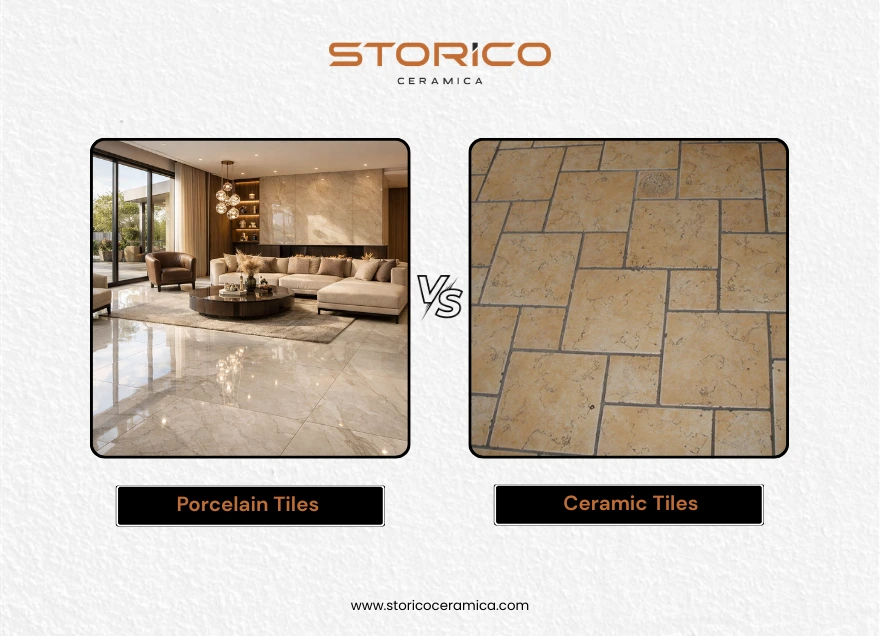
Porcelain Tiles vs Ceramic Tiles: What Buyers Should Know Before Choosing
When selecting tiles for residential or commercial projects, one of the most common questions buyers face is:
Should you choose porcelain tiles or ceramic tiles?
At first glance, both options may appear similar. However, there are important differences in composition, performance, and application that can significantly impact your project.
Understanding these differences helps architects, homeowners, and importers make informed decisions based on durability, design requirements, and long-term value.
What Are Porcelain Tiles?
Porcelain tiles are made from refined clay and fired at very high temperatures. This process creates a dense and durable tile with low water absorption.
Because of their strength and performance, porcelain floor tiles are widely used in:
- Residential flooring
- Commercial spaces
- Bathrooms and kitchens
- Outdoor applications
Porcelain tiles are known for their ability to handle high traffic and challenging environments without losing their appearance.
What Are Ceramic Tiles?
Ceramic tiles are made from natural clay and are fired at lower temperatures compared to porcelain. They are generally softer and more porous.
Ceramic tiles are commonly used for:
- Interior walls
- Light-use flooring
- Decorative applications
While ceramic tiles are cost-effective and easy to install, they may not offer the same level of durability as porcelain tiles.
Key Differences Between Porcelain and Ceramic Tiles
1. Durability and Strength
Porcelain tiles are significantly denser and stronger than ceramic tiles. This makes them suitable for heavy-use areas such as commercial spaces and high-traffic residential flooring.
Ceramic tiles, being softer, are better suited for low-traffic areas.
2. Water Absorption
Porcelain tiles have very low water absorption, which makes them ideal for wet areas and porcelain tiles for bathrooms.
Ceramic tiles absorb more water and may not perform as well in moisture-prone environments.
3. Application Versatility
Porcelain tiles can be used across a wide range of applications, including:
- Indoor flooring
- Outdoor porcelain tile surfaces
- Walls and feature areas
Ceramic tiles are more limited and are typically used indoors.
4. Design and Finish Options
Modern porcelain tiles are available in a wide variety of designs, such as:
- Marble look porcelain tile
- Wood look porcelain tile
- Stone and concrete finishes
These designs allow porcelain tiles to replicate natural materials with high precision. Ceramic tiles also offer design options, but may not achieve the same level of realism and finish quality.
5. Maintenance and Longevity
Porcelain tiles require minimal maintenance and maintain their appearance over time, even in demanding environments.
Ceramic tiles may require more care and are more prone to wear and damage in high-traffic areas.
Which Tile Should You Choose?
The choice between porcelain and ceramic tiles depends on the application and performance requirements.
Choose porcelain tiles if you need:
- High durability
- Moisture resistance
- Outdoor application capability
- Long-term performance
Choose ceramic tiles if you are working on:
- Low-traffic indoor areas
- Decorative wall applications
- Budget-focused projects
Why Porcelain Tiles Are the Preferred Choice Today
With evolving design trends and performance expectations, porcelain tiles have become the preferred material in global markets such as the United States and Europe.
At Storico Ceramica, the focus is on delivering high-quality porcelain surfaces that combine design innovation with durability. As a trusted porcelain tiles manufacturer from India, Storico offers a wide range of collections tailored for modern architectural needs.
From large format porcelain tiles to marble look and wood look porcelain tiles, the brand caters to international buyers looking for reliable and design-driven tile solutions
Conclusion
While both porcelain and ceramic tiles have their place in construction, porcelain tiles clearly stand out in terms of performance, versatility, and design possibilities.
From porcelain floor tiles and large format porcelain tiles to bathroom and outdoor applications, porcelain continues to lead modern architectural trends.
At Storico Ceramica, this evolution is reflected in a wide range of thoughtfully designed collections created for global markets. And while this comparison helps simplify your decision, there is much more to explore across our porcelain tile collections.
Frequently Asked Questions
Yes, porcelain tiles are generally better in terms of durability, water resistance, and long-term performance. They are ideal for both residential and commercial applications, including high-traffic and outdoor areas.
Yes, outdoor porcelain tiles are specifically designed to withstand weather conditions, moisture, and temperature changes, making them suitable for exterior applications like patios and terraces.
Yes, marble look porcelain tiles offer the same luxurious appearance as natural marble but are more durable, cost-effective, and easier to maintain.
India is known for its advanced tile manufacturing capabilities, wide design variety, and competitive pricing. Many international buyers prefer sourcing from a porcelain tiles exporter from India for reliable quality and global supply.

Porcelain Tile Manufacturer & Exporter
As a trusted porcelain tiles manufacturer from India, Storico Ceramica shares practical insights backed by real manufacturing and global export experience. Our content focuses on helping buyers understand porcelain floor tiles and large format porcelain tile solutions with clarity.
Recent Blogs